Launch offer — valid today only

📄 Digital book in PDF · read it on your phone or print it

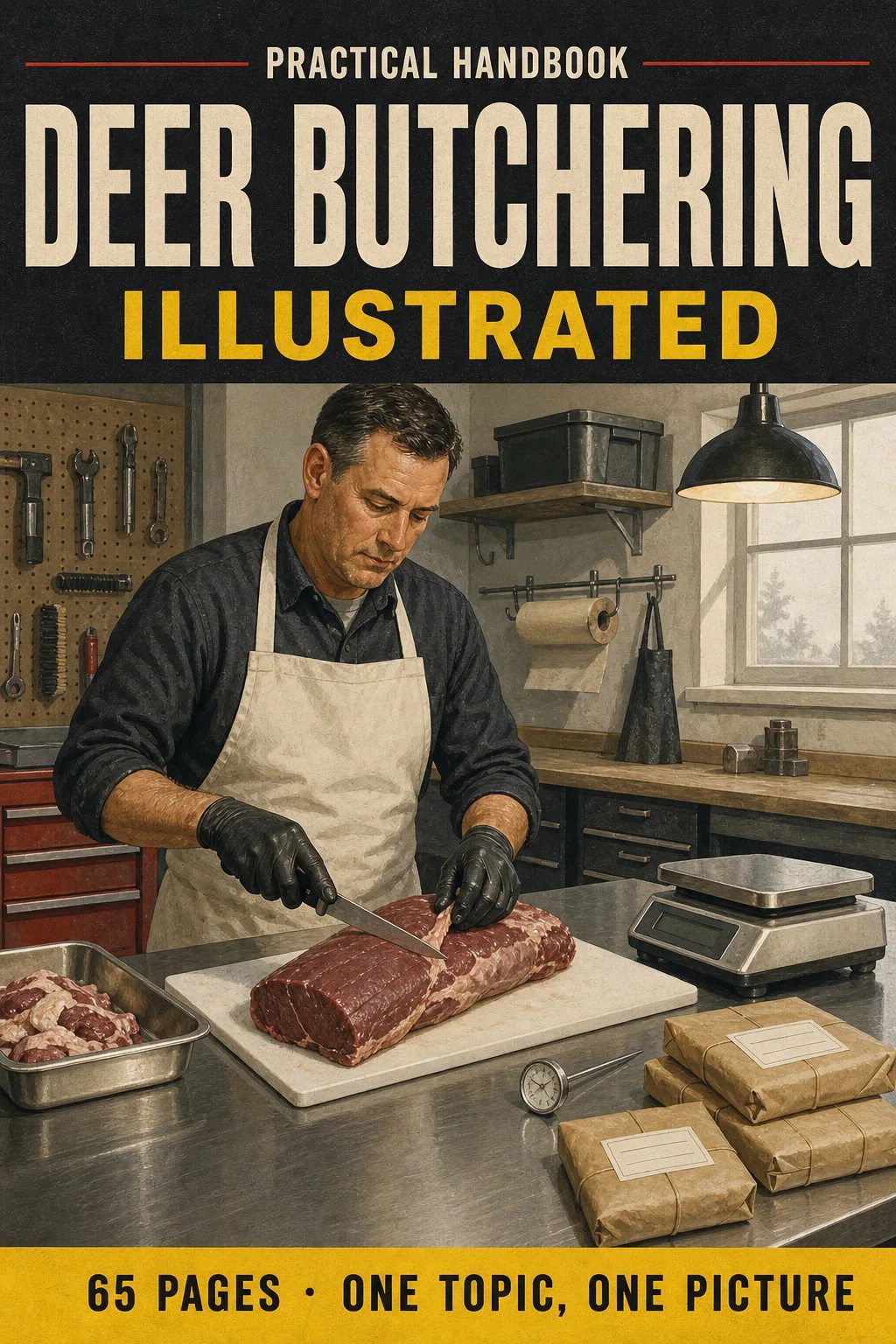
Home Deer Butchering, From Hanging to Freezer, in Drawings Every Cut on Its Own Page

Hanging temperatures, skinning, the muscle map, the five primals, backstraps and tenderloins, boning out the hind leg, steaks across the grain, grind and wrapping. Every topic has its own page: the drawing first, then what you need to remember. 65 illustrated pages.

START CUTTING YOUR DEER THIS WAY

🔒 Secure checkout · PDF by email · 30-day guarantee

Every topic, its own pageEvery cut drawn, with the explanation right beside it
65 illustrated pages8 parts, from the order that never changes to the whole deer in one diagram
Up-to-date sourcesTemperatures and CWD rules checked against Health Canada and CFIA guidance
PDF by emailFormat

Look Inside the Book

Every page has one big drawing and a box with the temperatures, steps and cuts you need to know:

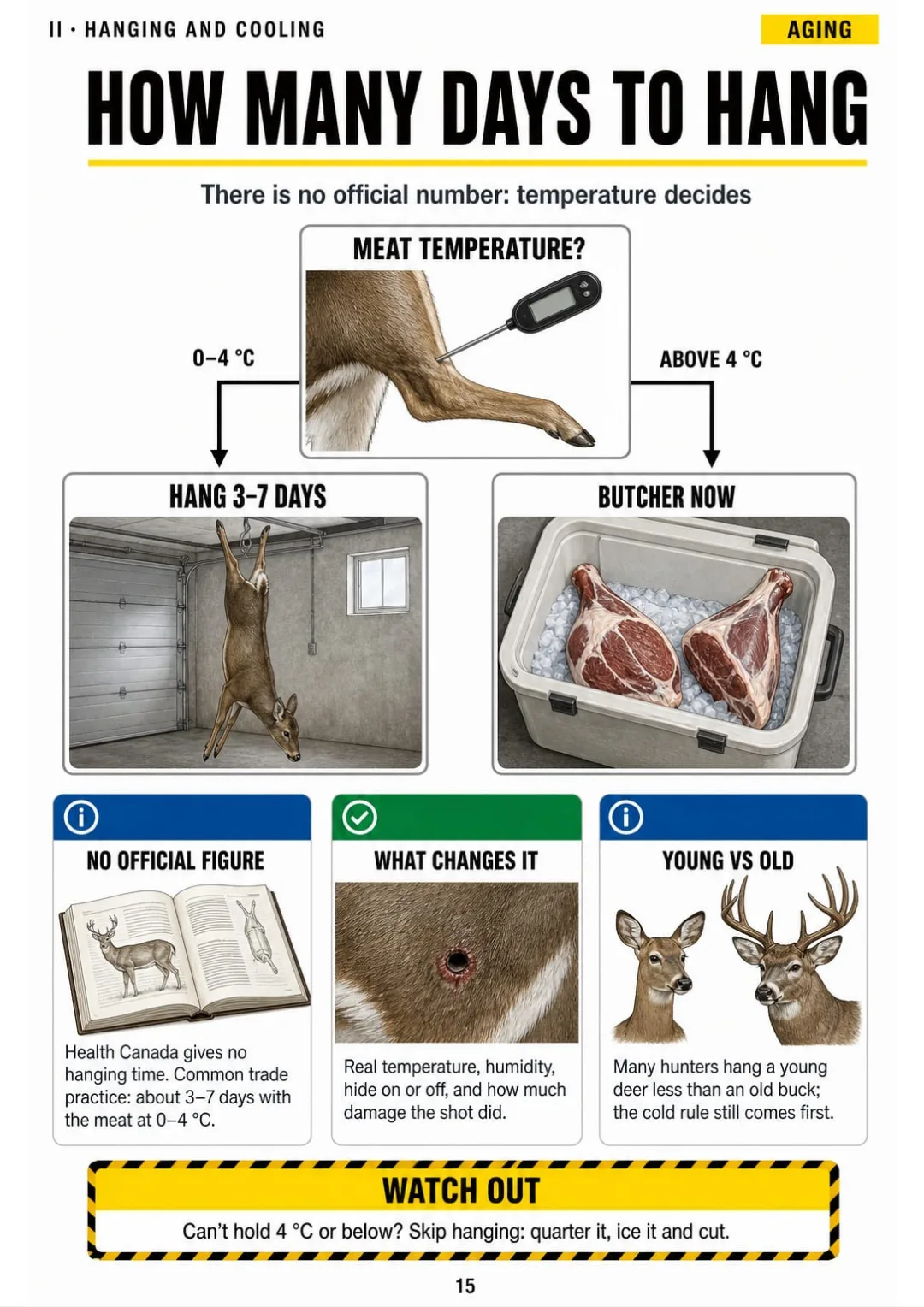
Hang only while the meat stays at 0–4 °C; above that, butcher straight away.
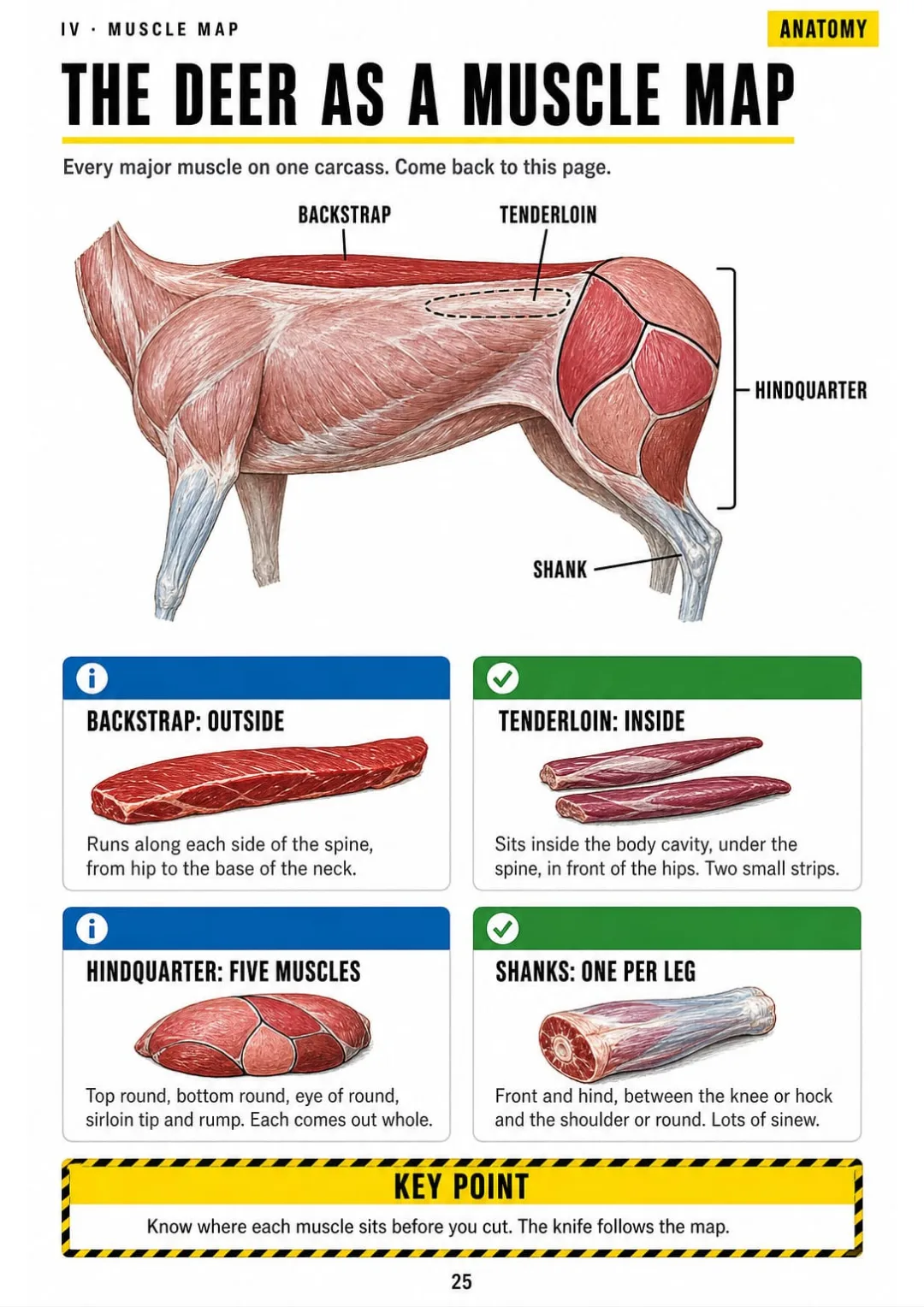
Backstrap outside, tenderloin inside, five muscles in each hindquarter: the whole deer mapped.
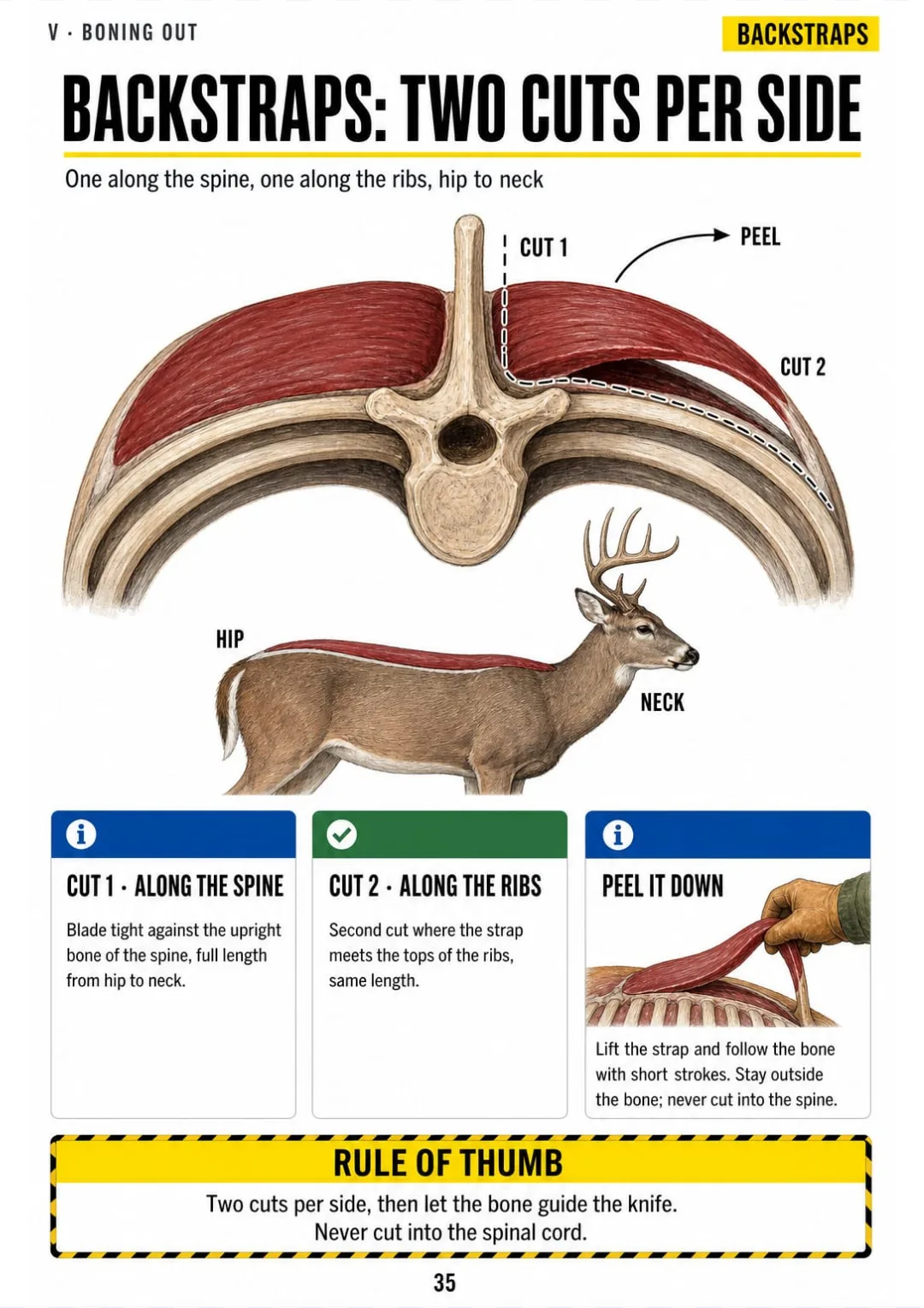
Backstraps in 2 cuts per side: along the spine, along the ribs, hip to neck
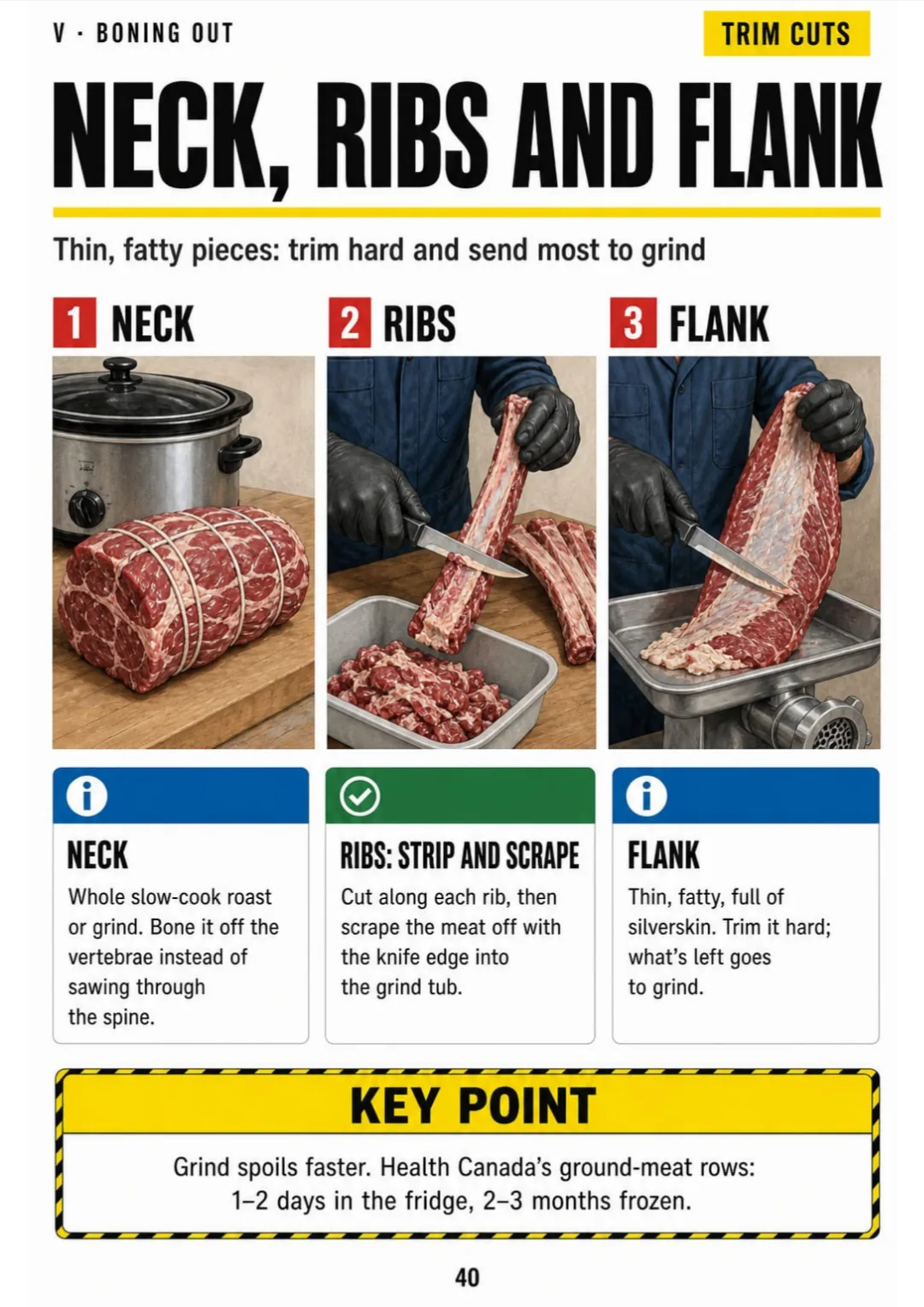
Neck, ribs, flank: slow-cook roast or grind, and the rib strip-and-scrape method
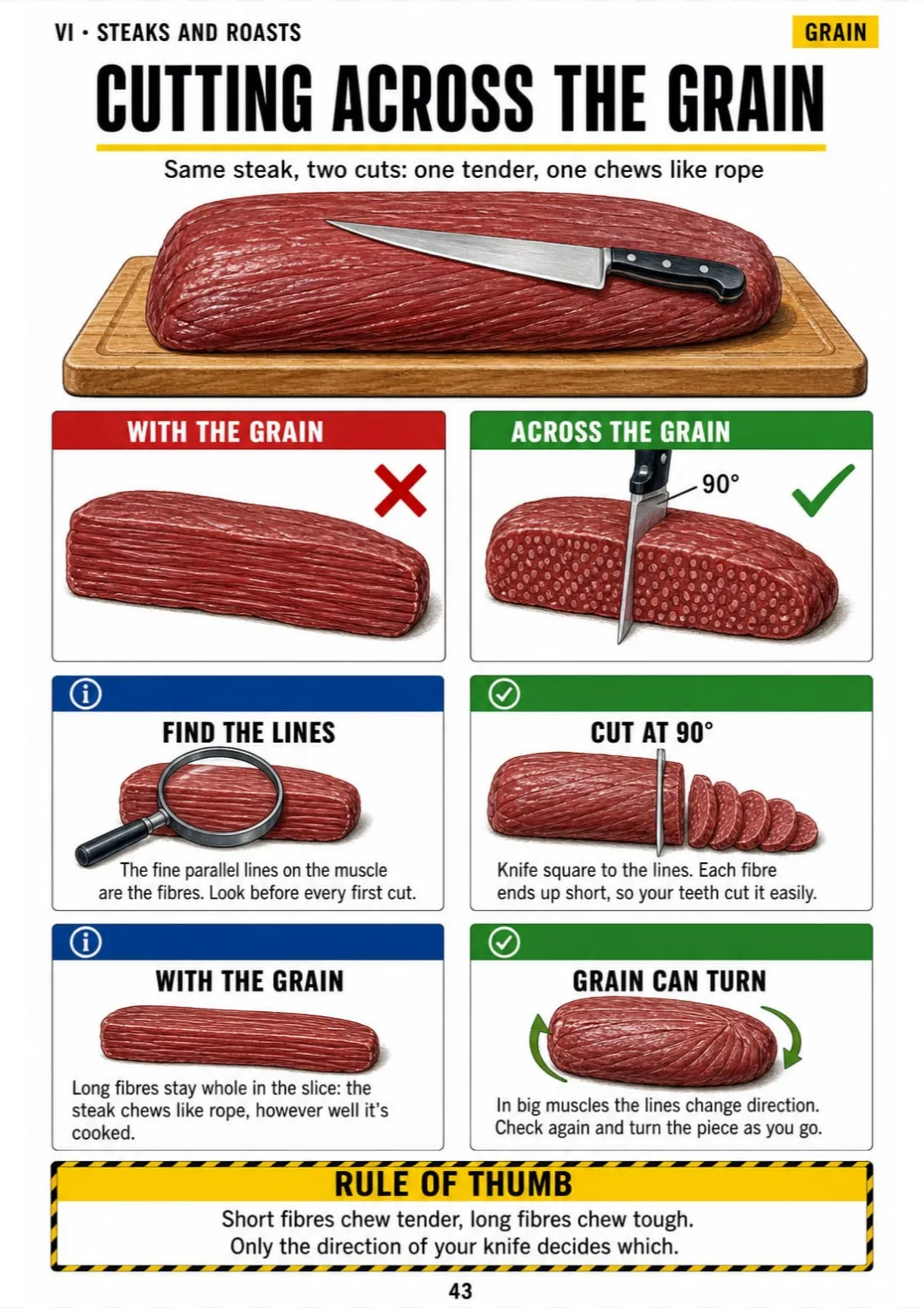
Cut at 90° to the fibre lines: short fibres chew tender, long ones chew like rope.
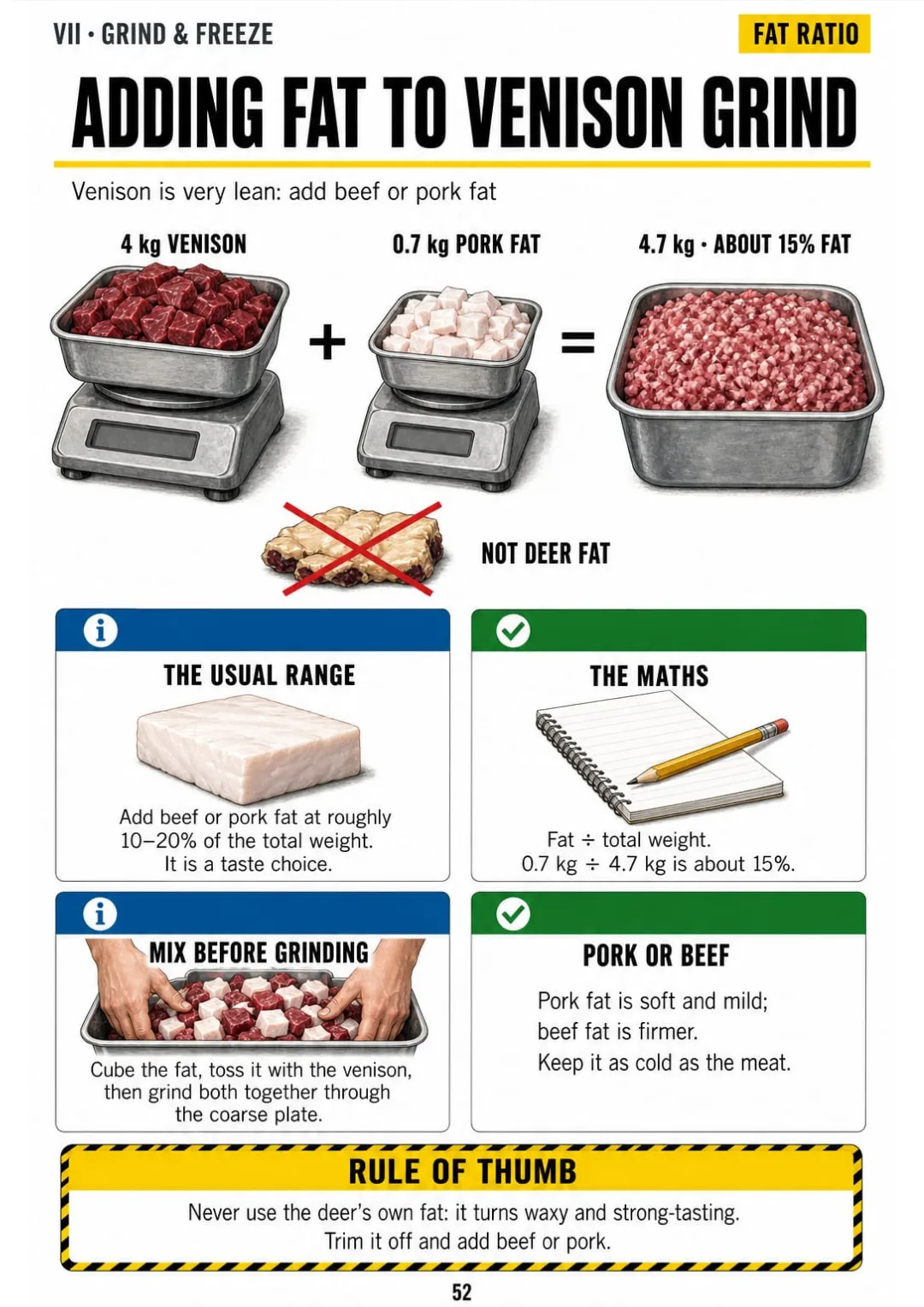
4 kg venison + 0.7 kg pork fat = about 15% fat, never deer fat.
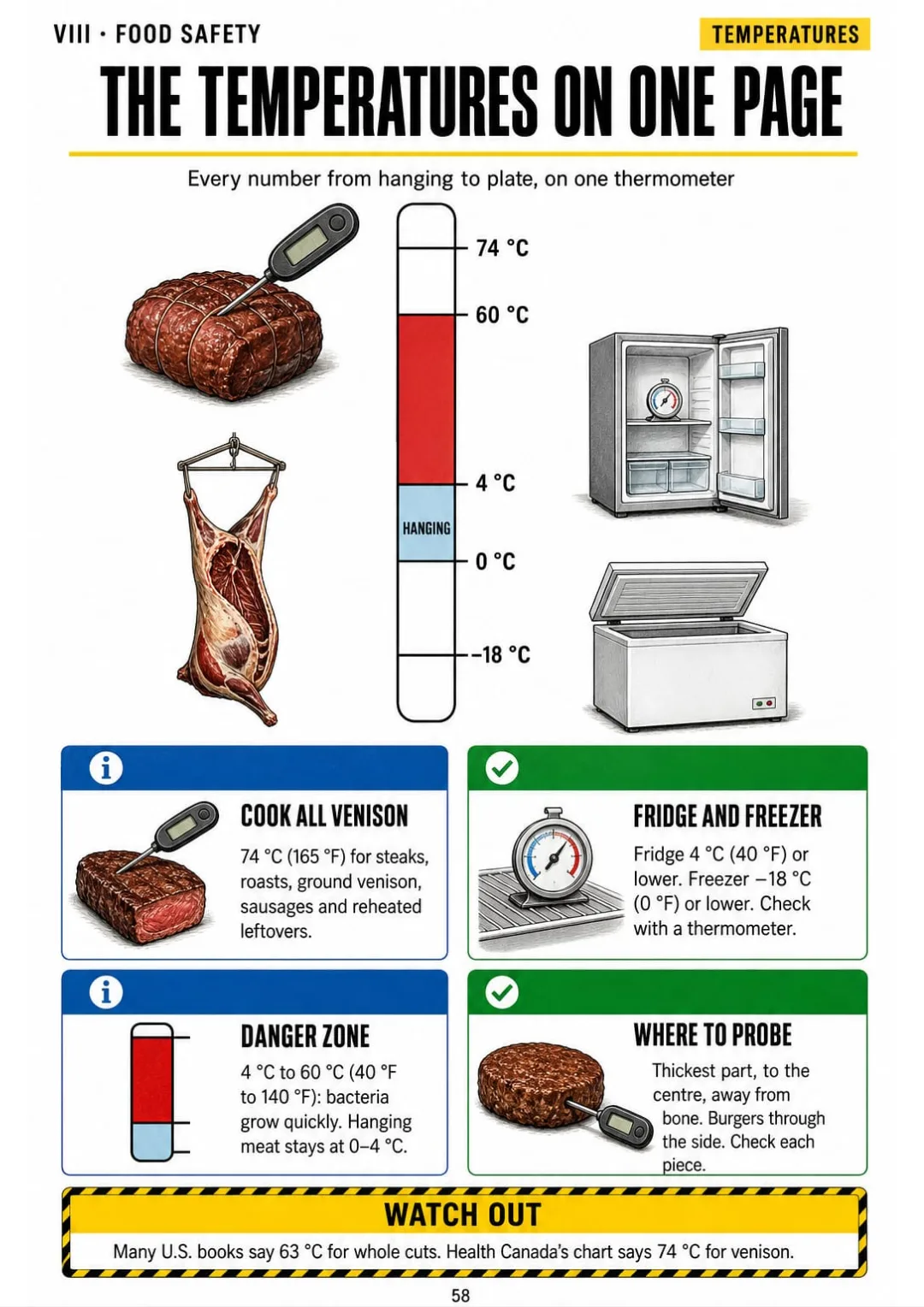
74 °C to cook, 4 °C fridge, −18 °C freezer, 4–60 °C danger zone
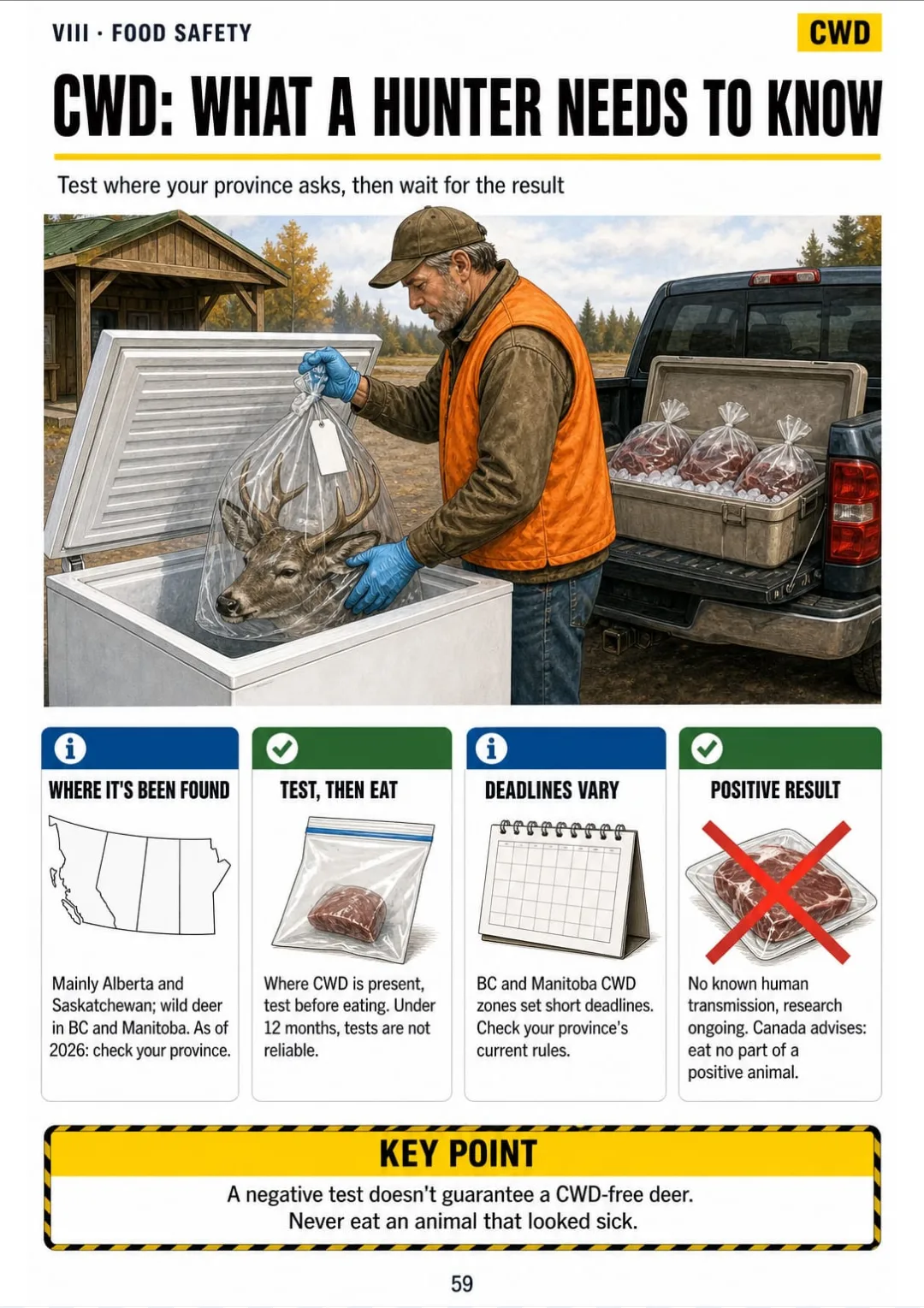
Test before eating where CWD is present; never eat a positive deer

Swipe to see more →

These are real pages from the book. The table of contents is the full one: 8 parts and 61 topics.

The Problem Isn't You. It's How It Was Explained.

The deer is hanging in the garage, it's cold enough, and you're standing at the spine with a knife, ready to take out the backstraps. You've seen it done, but you're not sure where the first cut starts.

One video showed it one way, the next one another. The book from the shop gives you a paragraph: "make an incision parallel to the dorsal processes and continue along the rib cage…". Words don't show you where the bone is.

Backstraps in 2 cuts per side: along the spine, along the ribs, hip to neck

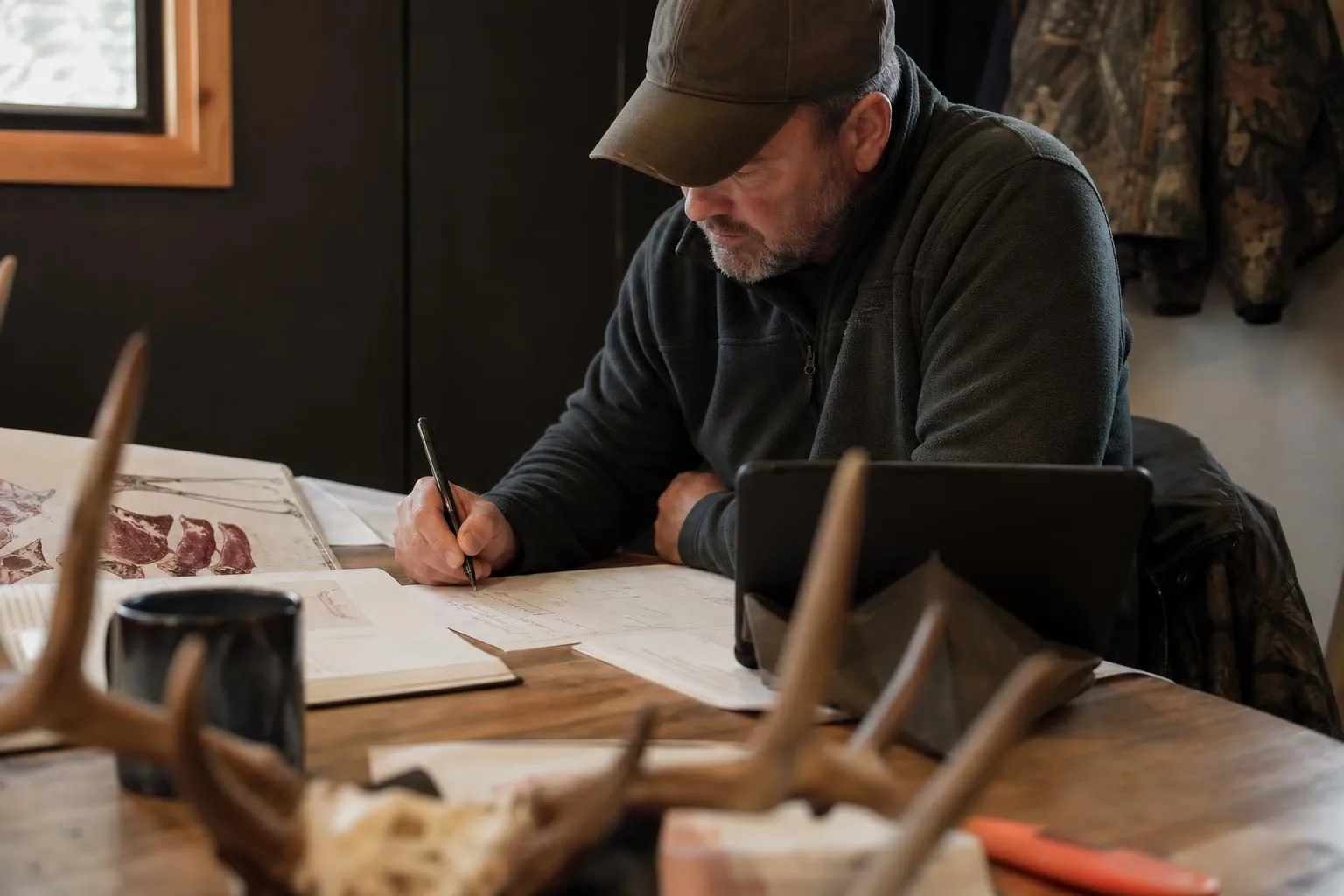
In this book, the backstraps are one page: the spine drawn from hip to neck, two arrows per side, one along the spine and one along the top of the ribs. You see both cuts before the knife touches the meat.

Same with the tenderloins, taking the hindquarter off in one piece, boning out the hind leg, cutting across the grain and adding fat to the grind: each one has its own page.

You understand it, you make the cut, and you don't go back to rewind a video.

COMPARE FOR YOURSELF

The Same Topic, Two Ways to Learn It

THIS
  • The usual manual: line after line
  • Cuts explained in words only
  • You stand at the carcass still unsure
The musculature of the cervid carcass may be classified according to anatomical region and culinary application. The longissimus dorsi, commonly designated the backstrap, extends bilaterally along the dorsal aspect of the thoracic and lumbar vertebrae, whereas the psoas major, or tenderloin, is situated ventrally to the lumbar vertebrae within the abdominal cavity. The pelvic limb comprises several principal muscle groups, including the semimembranosus, semitendinosus, biceps femoris, quadriceps complex and gluteus medius, each of which should be separated along its natural fascial seams prior to further fabrication.
FOR THIS
  • Every muscle on one drawing
  • Temperatures and steps in a box
  • You see it and you get it
Backstrap outside, tenderloin inside, five muscles in each hindquarter: the whole deer mapped.
CONTENTS

Take a Look at the 8 Parts and 61 Topics

Before the knife, hanging and cooling, skinning, the muscle map, breaking down and boning out, trimming and steaks, grind, wrap and freeze, and food safety with the whole deer in one diagram: 8 parts, 65 pages, all illustrated.

IBefore the Knife · pp. 5-11
  1. The Order That Never Changes
  2. Three Knives Are Enough
  3. Sharp, Then Steel
  4. Setting Up a Garage to Cut In
  5. Cutting Boards, Tubs and Ice
  6. Gloves, Hygiene and Cross-Contamination
  7. Planning the Day: How Long Each Stage Takes
IIHanging and Cooling · pp. 12-18
  1. Why Fast Cooling Matters
  2. The Hanging Temperature Window
  3. Head Up or Head Down
  4. How Many Days to Hang
  5. When the Weather Turns Warm
  6. Hide On or Hide Off While Hanging
  7. Signs the Meat Is Going Off
IIISkinning · pp. 19-24
  1. The Skinning Cuts, Mapped
  2. Avoid the Tarsal Glands
  3. Peeling the Hide Down
  4. Hair on the Meat: Getting It Off
  5. The Shot Area and Bloodshot Meat
  6. Removing the Head and Lower Legs
IVThe Muscle Map · pp. 25-32
  1. The Deer as a Muscle Map
  2. The Five Primals
  3. Whitetail vs Mule Deer: What Changes
  4. Seams: Cutting Along, Not Across
  5. Silverskin and Fat: What Stays, What Goes
  6. Tender, Medium, Tough: Using Each Muscle
  7. Yield: What to Expect From Your Deer
  8. Bone-In vs Boneless
VBreaking Down and Boning Out · pp. 33-41
  1. Taking the Front Shoulder Off
  2. The Tenderloins First
  3. Taking Out the Backstraps
  4. Removing the Hindquarter
  5. Boning the Hind Leg Into Its Muscles
  6. Getting the Femur Out
  7. Boning the Front Shoulder
  8. Neck, Ribs and Flank
  9. Lymph Nodes and Tissues to Leave Out
VITrimming, Steaks and Roasts · pp. 42-49
  1. Trimming a Muscle Clean
  2. Cutting Across the Grain
  3. Steak Thickness
  4. Backstrap: Medallions or Whole Roast
  5. Hind Leg Roasts
  6. Round Steaks and Jerky Strips
  7. Stew and Slow-Cook Cuts
  8. Sorting Into Tubs as You Go
VIIGrind, Wrap and Freeze · pp. 50-57
  1. Keep Everything Cold for Grinding
  2. Coarse Plate, Then Fine Plate
  3. Adding Fat to Venison Grind
  4. Portioning Grind
  5. Vacuum Seal vs Butcher Paper
  6. Labelling Every Package
  7. Freezing and Freezer Times
  8. Thawing the Safe Way
VIIIFood Safety and Final Review · pp. 58-65
  1. The Temperatures on One Page
  2. Chronic Wasting Disease: What a Hunter Needs to Know
  3. Cleaning and Sanitizing Afterwards
  4. Getting Rid of the Waste
  5. Ten Common Mistakes
  6. Fixing a Strong or Gamey Taste
  7. Cut-Up Day Checklist
  8. The Whole Deer in One Diagram

One Page, One Topic, All Clear

Think of it this way:

It's Saturday morning, the deer has been hanging in the garage, and the forecast says a mild week is coming. The hindquarters need to come off and be boned out today.

You open the hindquarter page and see the pelvis drawn, the ball joint marked and four numbered steps: follow the pelvis, find the joint, pop it, cut around. You know where the knife goes before you pick it up.

Cut at 90° to the fibre lines: short fibres chew tender, long ones chew like rope.

Same with the backstraps, the tenderloins, steak thickness, the fat for the grind and the freezer temperatures: each one on its own page.

Deer Butchering Illustrated is 65 pages in 8 parts, all drawn, ending with ten common mistakes, a cut-up day checklist and the whole deer in one diagram.

What you see drawn, you don't have to memorize.

What's Inside Deer Butchering Illustrated:

Ipp. 5-11

Before the Knife

The order that never changes, the three knives you need, sharpening, setting up the garage, boards, tubs and ice, hygiene and planning the day.

IIpp. 12-18

Hanging and Cooling

Why fast cooling matters, the 0–4 °C hanging window, head up or head down, how many days to hang, what to do when the weather turns warm and the signs of spoilage.

IIIpp. 19-24

Skinning

The skinning cuts mapped, the tarsal glands, peeling the hide, getting hair off the meat, bloodshot meat, and the head and lower legs.

IVpp. 25-32

The Muscle Map

The deer as a muscle map, the five primals, whitetail vs mule deer, cutting along the seams, silverskin and fat, tender vs tough muscles, yield, and bone-in vs boneless.

Vpp. 33-41

Breaking Down and Boning Out

Shoulder off, tenderloins first, backstraps, the hindquarter, boning the hind leg into its muscles, the femur, the shoulder, neck, ribs and flank, and the lymph nodes to leave out.

VIpp. 42-49

Trimming, Steaks and Roasts

Trimming a muscle clean, cutting across the grain, steak thickness, medallions or roast, hind leg roasts, round steaks and jerky strips, stew cuts and sorting into tubs.

VIIpp. 50-57

Grind, Wrap and Freeze

Keeping it cold for grinding, coarse then fine plate, adding fat, portioning, vacuum seal vs butcher paper, labelling, freezer times and safe thawing.

VIIIpp. 58-65

Food Safety and Final Review

Every temperature on one page, chronic wasting disease, cleaning and sanitizing, getting rid of the waste, ten common mistakes, fixing a gamey taste, the cut-up day checklist and the whole deer in one diagram.

At the end of the book: Ten common mistakes, a cut-up day checklist and the whole deer in one diagram.
Plus: 2 Free Books

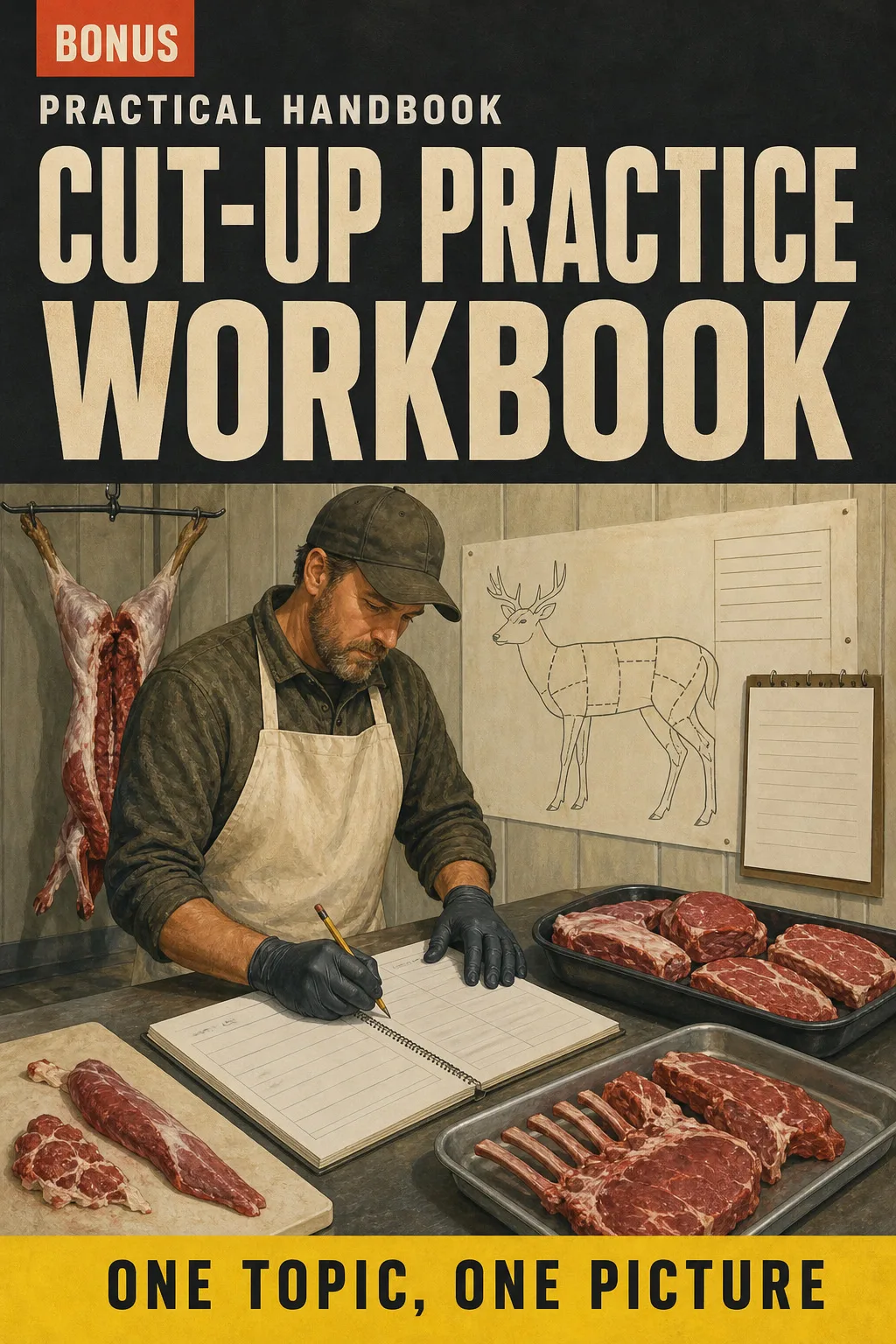
Cut-Up Practice Workbook

BONUS 1: «Cut-Up Practice Workbook»

Value on its own: US$ 17.90

Label the muscle map, plan your cuts and work out your yield on paper first, so the real deer goes in the right order.

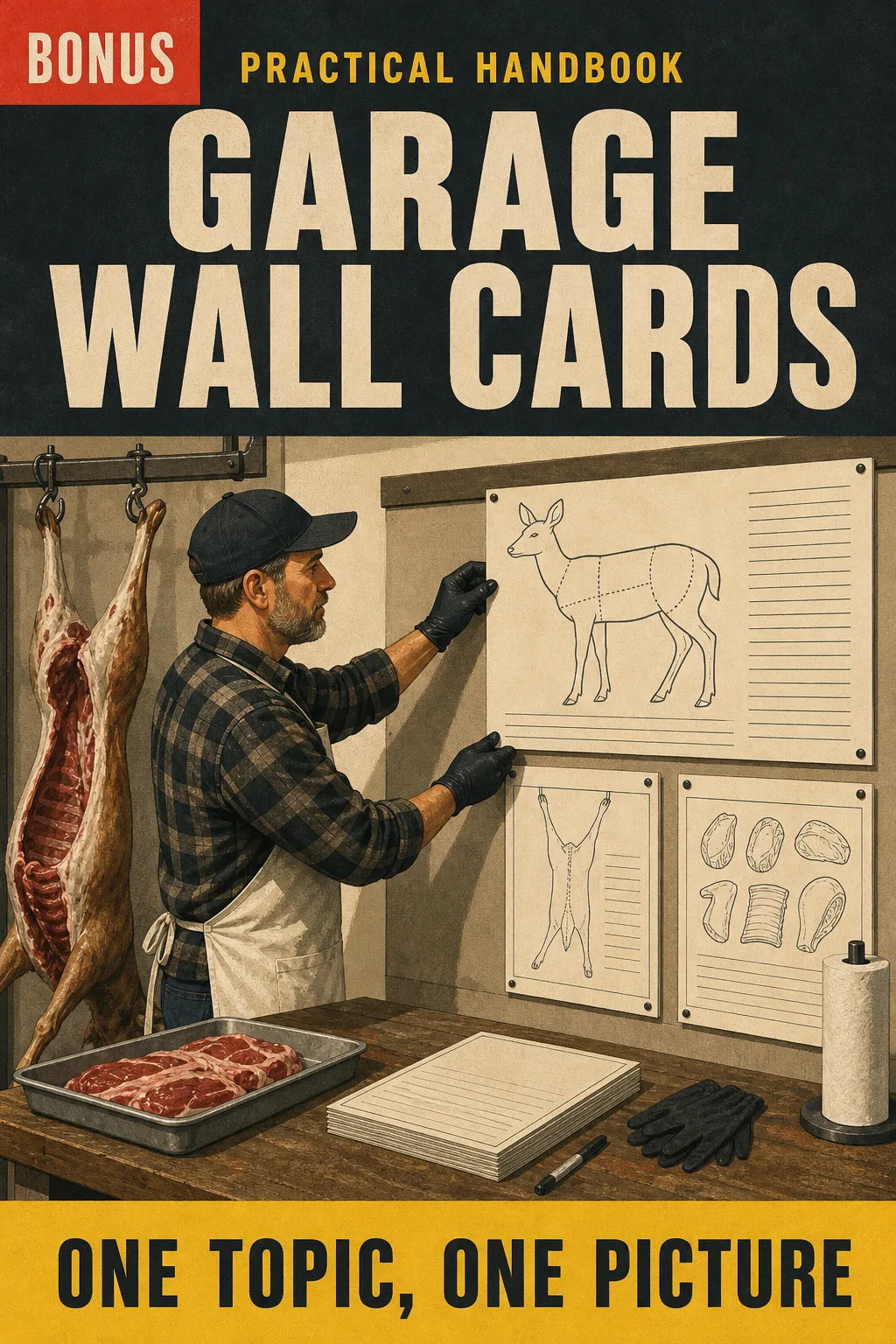
Garage Wall Cards

BONUS 2: «Garage Wall Cards»

Value on its own: US$ 14.90

Hanging temperatures, steak thickness, grind portions and freezer times on one printable card each, to keep at eye level while you cut.

Deer Butchering Illustrated with 2 Free Books

  • Deer Butchering Illustrated: 65 illustrated pagesUS$ 63
  • BONUS 1: Cut-Up Practice WorkbookUS$ 17.90
  • BONUS 2: Garage Wall CardsUS$ 14.90
  • High-resolution PDF to printIncluded
Total value US$ 95.80
YOUR PRICE:
US$ 27
You save US$ 68.80
YES, I WANT DEER BUTCHERING ILLUSTRATED FOR US$ 27

📄 This is a digital PDF book sent to your email: nothing is printed or shipped.

Secure purchaseEncrypted payment30-day guarantee

PDF by email: We email you Deer Butchering Illustrated as a PDF, together with the two free books. It's a single payment: no installments, no extra charges.

Who This Book Is For

Your first deer cut at home

Your first deer cut at home

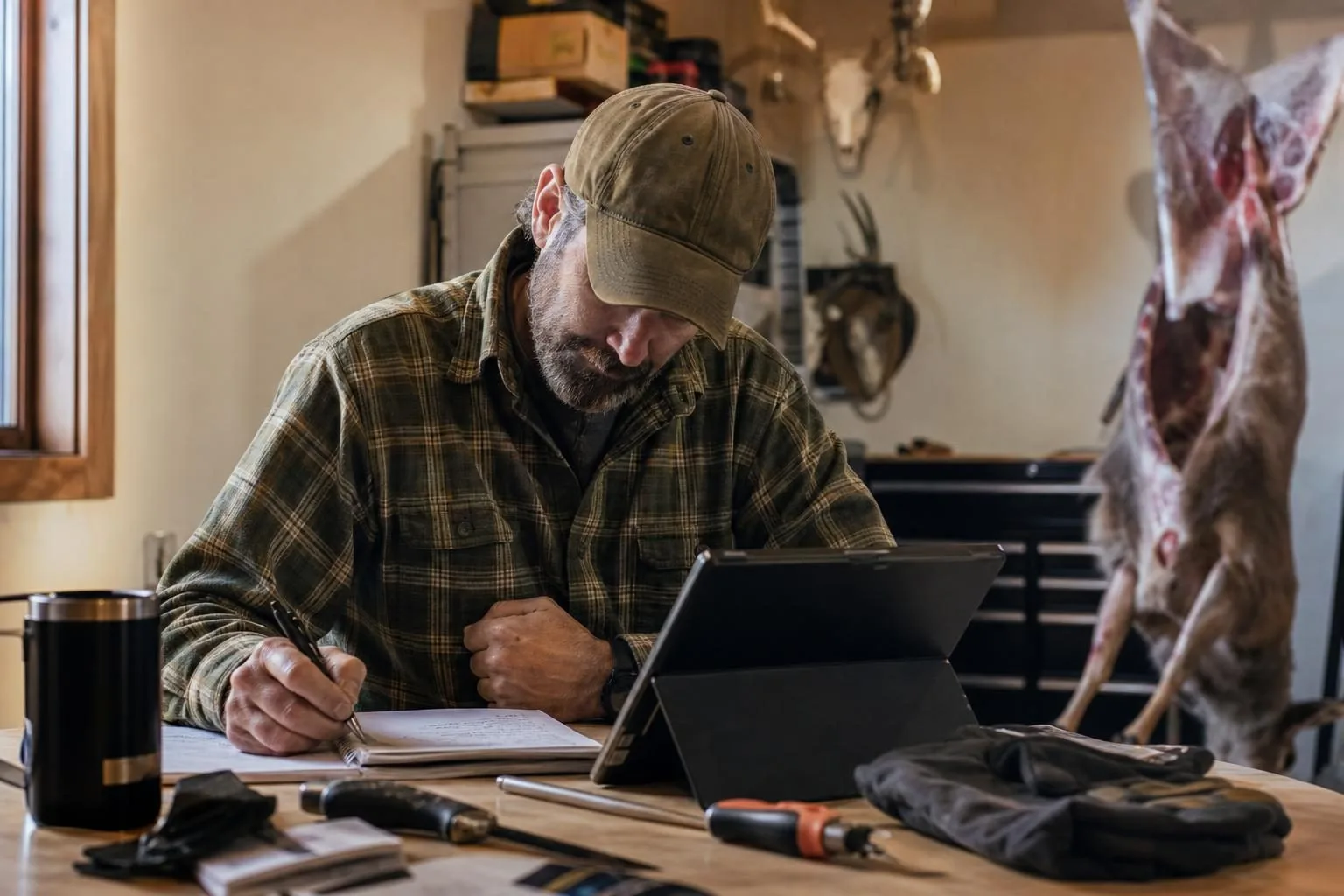
You see the whole order before the knife comes out, and you plan the cuts on paper with the workbook before the real deer.

The deer is hanging right now

The deer is hanging right now

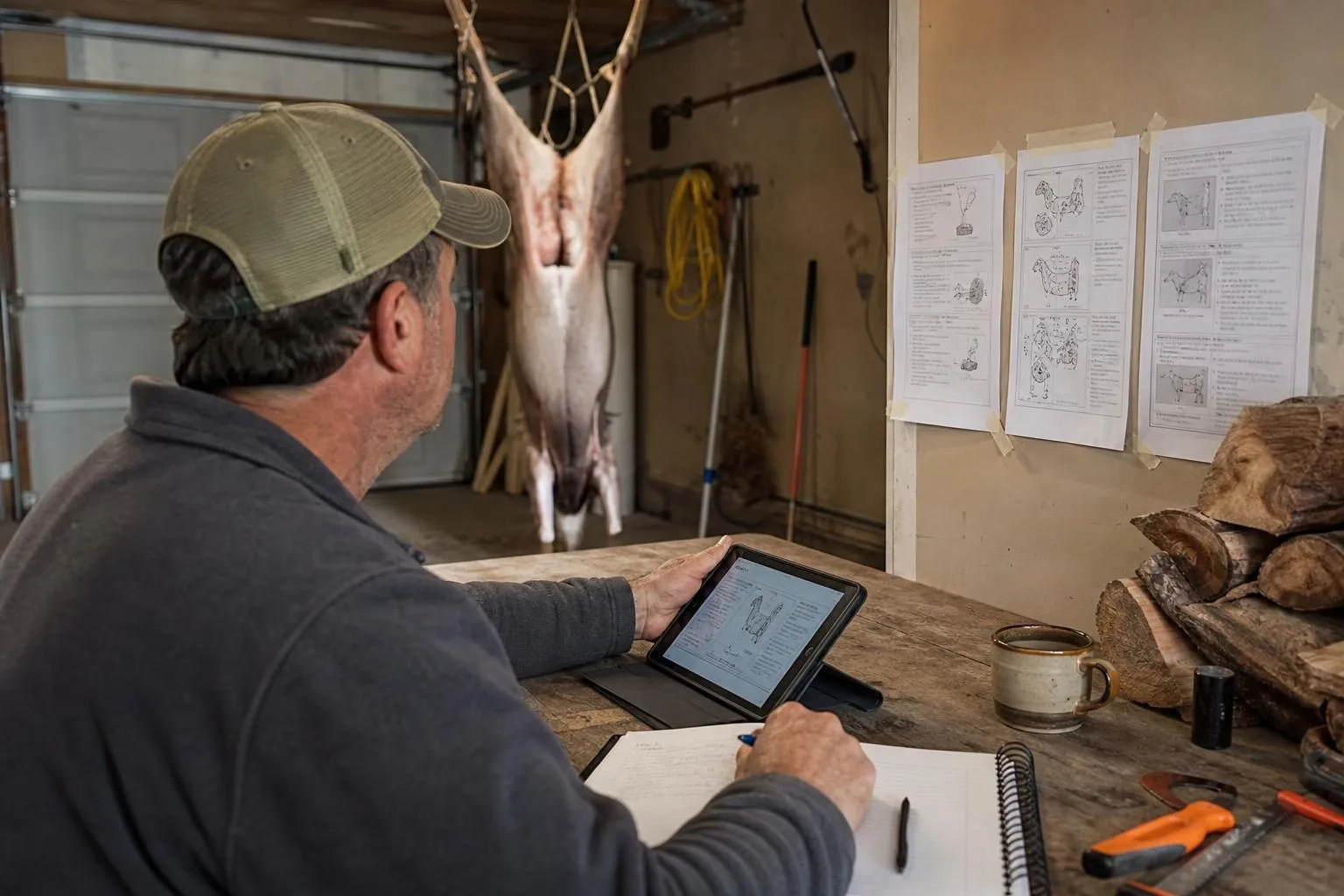
The hanging window, the signs to watch and the breakdown order, one page each, printed and taped up in the garage.

You've always used a processor

You've always used a processor

You take control of your own meat: what goes to steaks, what goes to grind, how it's trimmed and how every package is labelled.

Everything You Get Today

US$ 95.80US$ 27
YES, I WANT DEER BUTCHERING ILLUSTRATED FOR US$ 27

📄 This is a digital PDF book sent to your email: nothing is printed or shipped.

30DAYS
GUARANTEE

30-Day Guarantee

Try Deer Butchering Illustrated for 30 days, bonus books included.

We refund everything if the file won't open, if the book isn't what you see here, if you were charged twice or if the email doesn't arrive. Just email us.

You pay once. No subscriptions.

Frequently Asked Questions

Is it for me if I've always taken my deer to a processor?

Yes. It starts from the very beginning, with the knives and setting up a garage to cut in, and follows the same order every time. It covers whitetail and mule deer, and you don't need a cold room or a butcher's table.

Where does the content come from?

Temperatures, times and rules are checked against current Health Canada food-safety guidance, CFIA guidance on chronic wasting disease and provincial hunting regulations and CWD programs. Temperatures are in °C and weights in kilograms.

Is this official material?

No. It's an independent illustrated guide. It isn't published, approved or endorsed by Health Canada, the CFIA or any provincial agency.

Does it replace a butchering course or official guidance?

No. It's practical material for cutting at home. It doesn't replace hands-on training, your provincial regulations or advice from food-safety and wildlife authorities, especially on CWD testing where you hunt.

Does it cover the rules where I hunt?

Temperatures follow Health Canada food-safety guidance, which applies across Canada, and there's a page on chronic wasting disease. CWD testing and carcass-transport rules change by province, so check them with your provincial wildlife agency before cut-up day.

When and how does it arrive?

The book and both bonus books arrive as PDFs by email, to the address you enter at checkout.

Do I have to pay every month?

No. It's a one-time payment, with no subscription.

Can I have it on paper?

Yes. It's a PDF you can print at home or at a print shop and keep in the garage while you cut. The wall cards are made to be printed.

How does the refund work?

You have 30 days. We refund everything if the file won't open, if the book isn't what you see on this page, if you were charged twice or if the email doesn't arrive: just email us.

Before You Close This Page

No more pausing videos that each cut it differently.

The backstraps, the hindquarter, the grind: you see it drawn and you cut.

You walk into the garage knowing where every cut lives.

Drawings make studying faster.

The book is right below.

One-time payment: US$ 27 · Guarantee: 30 days · PDF by email

YES, I WANT DEER BUTCHERING ILLUSTRATED FOR US$ 27

📄 This is a digital PDF book sent to your email: nothing is printed or shipped.